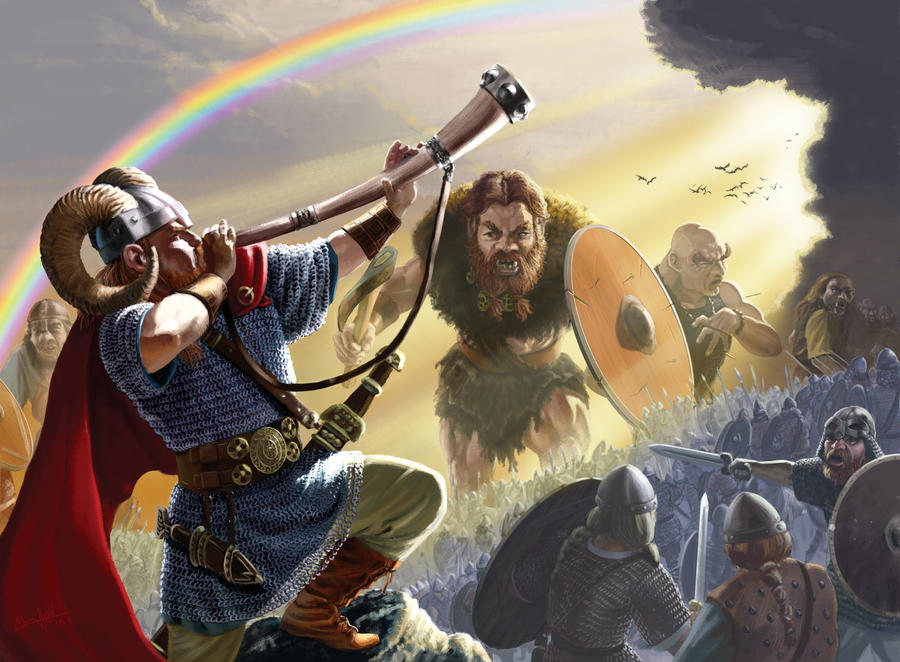
Heimdall (pronounced HAME-doll) is the Norse god of light. He stands guard at the rainbow bridge, Bifrost, which connects Asgard (the home of the gods) to the world of humans. Heimdall is Odin's son and belongs to the newer class of gods known as the Aesir.


First, he visited some serfs, then some peasants, and finally a noble couple. Nine months after each visit, a child was born to each.
- The first was a strong boy named Thrall, who became the ancestor of all serfs.
- The second, Karl, was skilled at farm work and became the ancestor of all peasants.
- Jarl, the last of the children, was intelligent and quick to learn the skills of hunting and combat. He became the ancestor of all warriors and nobles.

It's Thor's Day once again and I know I previously promised you some trivia on Heimdall, but I'm going to postpone that until next time.

And here's a LEGO Thor just because everything (LEGO) ....is... awesome!

Yes, yet another day of the week is named after a Norse god. Tyr (pronounced TEER) is the god of courage and justice. Tyr was originally known as Tiw (rhymes with ewe) and that's why the day is pronounced Tuesday.
That makes four days of the week named after Norse gods.

FYI: The modern Saturday is named after the Roman god, Saturn, but in Norse times it was washing day (apparently some things never change).
Back to Tyr - he is one of the oldest European gods and was originally the chief god, but was later overtaken in popularity and therefore in authority by Odin. The myth was modified so that Tyr later became Odin's son (so even though he is quite old, he belongs to the newer class of gods known as the Aesir).
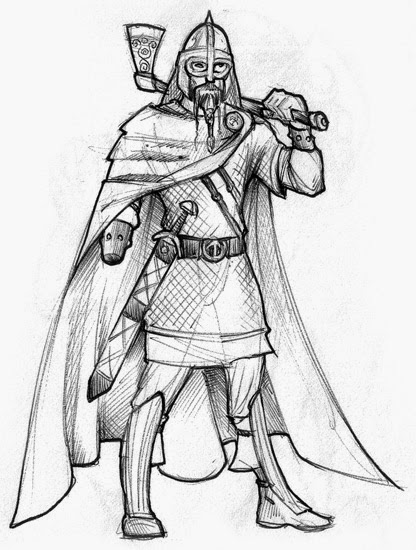
As you can see from the picture above, Tyr is missing his right hand. That's because it was bitten off by Fenrir the Wolf.
It was predicted that Fenrir (son of the trickster god, Loki) would cause trouble for the gods so they endeavored to bind the giant wolf for their own safety. The wolf refused to allow the suspiciously innocent-looking cord to be put around him unless one of the deities put his or her hand in his mouth as a pledge of good faith.


Freyr is one of the most important gods of Norse paganism. He is associated with prosperity, fair weather, and fertility. He is also the ruler of the Alfar (light elves).

- Freyr is the son of Njord and his twin sister is Freya (thus he also belongs to the older class of gods known as the Vanir).
- The sword he carries is a magical sword that can fight on its own.
- The dwarfs gave him a golden-bristled boar. The radiant bristles are considered symbolic either of the solar rays or of golden grain because the boar taught mankind how to plow.


